
The bid package is one of the most important outputs of the preconstruction workflow. It defines how scope is communicated, how bidders respond, and how contracts are written. Yet despite all the progress in construction technology, creating a good bid package remains one of the slowest, most error-prone, and most frustrating steps in the entire preconstruction process—and one of the most old-fashioned.
Modern Pre-construction, Outdated Tools
Everything else in preconstruction is speeding up. Schedules are tighter. Expectations are higher. Teams are more distributed. Yet the bid package—the very thing that sets up the rest of the project—still relies on outdated templates, static Word docs, marked-up PDFs, and chaotic email threads.
Why? Because the tools most teams use weren’t built to handle the complexity and coordination required for modern bid packages.
Bid packages involve complex coordination of exhibits, scope directives, specification items, and attachments. But most teams still manage this with a folder of templates, a patchwork of Excel and Word documents, annotated PDFs, and long email chains. What should be a standardized, repeatable process ends up being a scramble every time.
Traditional Templates Help—but Barely
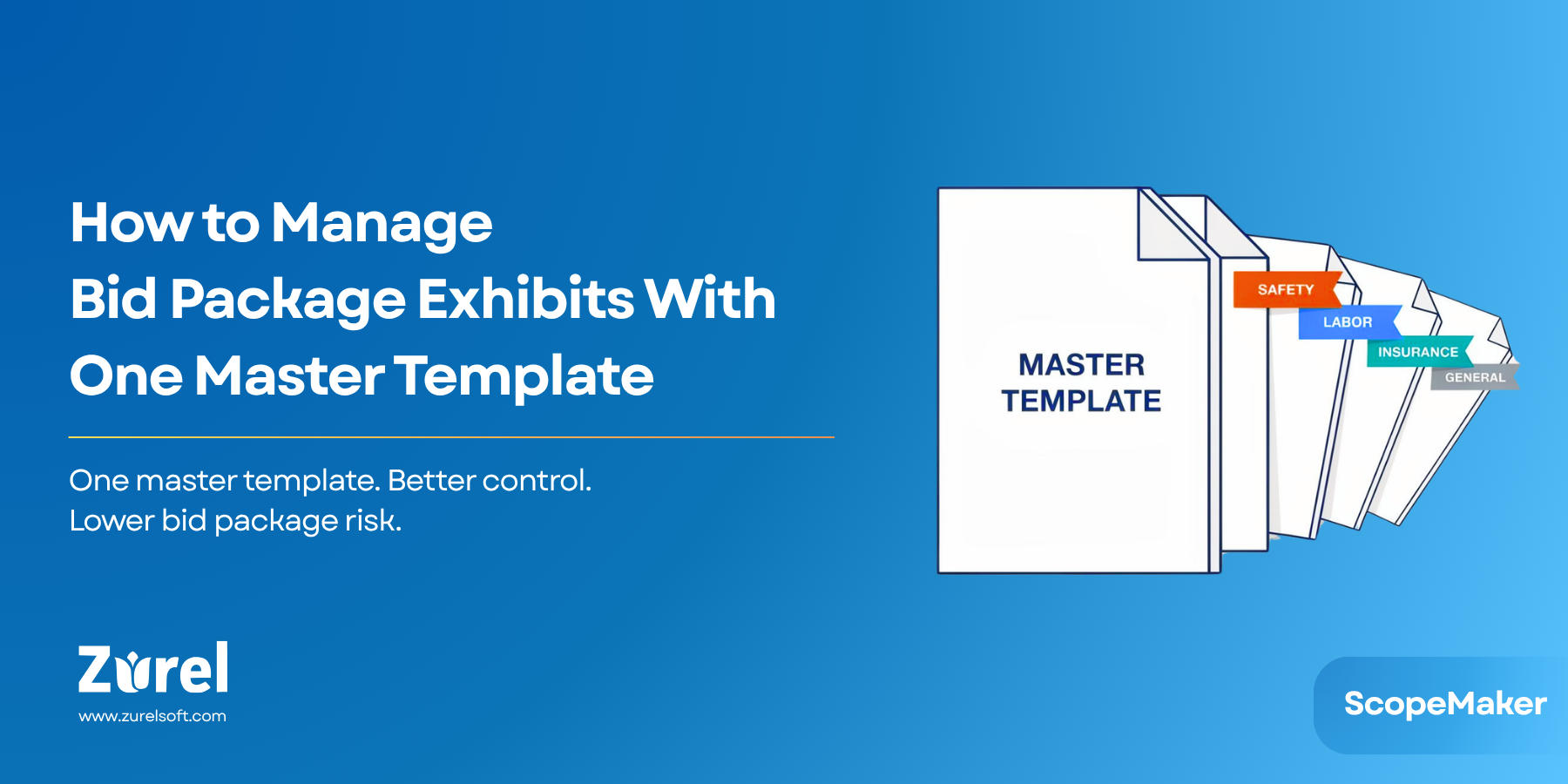
Most teams try to bring order to the process by creating templates in Word or Excel. And they help—at first. Templates offer structure and a starting point, saving time when you first open them. That’s if you firm has a set of templates that are enforced. More often than not, the “template” someone uses to create a scope is from the last project, a coworker, their manager, or even an online version. The lack of consistency in templates sets the lack of consistency in motion from the first step.
But even a solidly managed template process has benefits that fade fast. Every project has unique scope directives, different exhibits, and its own quirks. As soon as teams begin making changes, templates start to break down.
Guiding notes like “insert spec item here” or “check with estimating” often get deleted during edits, taking valuable context with them. And without a way to lock boilerplate language, even finalized text can be changed by accident.
Templates can’t enforce consistency across a full set of documents—especially not across multiple bid packages. Small inconsistencies in language, formatting, or attachments quickly add up, creating confusion, scope gaps, and rework.
Templates are static. Projects are not. And that mismatch leads to risk.
Collaboration Is Messy Process
Sharing drafts and getting feedback is rarely straightforward. Internally, teams email Word docs back and forth or drop comments into shared drives. Externally, trade partners often collaborate using marked-up PDFs or incomplete document sets sent via email. Everyone ends up working on different versions, in different formats, at different times.
Tracking input—who said what, why changes were made, and whether those changes made it into the final version—is nearly impossible. Inline comments disappear. Markups get lost. And because there’s no shared context or single source of truth, it’s easy for key decisions and edits to fall through the cracks.
Without a better system, collaboration becomes a source of delay, confusion, and avoidable errors. Worse yet, there’s often no clear audit trail or final sign-off to confirm what’s actually been approved.
The Audit Trails Are Fractured
In traditional tools, there’s no reliable way to track who changed what, when they changed it, or why. Version history is either nonexistent or impossible to follow. Comments are often tied to specific versions of a document or lost altogether as the document evolves. Even when feedback is given, it’s scattered across emails, chat threads, or marked-up PDFs—making it nearly impossible to maintain a clear, consistent record.
If a change is made, there’s no easy way to trace it back or understand the context behind the change. Edits made during collaboration frequently leave no trace that’s easy to review or verify. And without the ability to revert specific edits without losing other progress, teams resort to rework and guesswork.
Specified Scope Items are Scattered
In most projects, specified scope items live in a jumble of places—buried in meeting notes, scattered across spreadsheets, or tucked into draft documents. There’s rarely a structured system to manage them, let alone track where they’ve been used, what’s still pending, or what’s been dropped entirely.
Even when templates are used, inserting specific scope items is often a manual and error-prone process. One misplaced item—or one forgotten altogether—can throw off onbe or more scopes, confuse trade partners, or leave your team exposed to rework and change orders.
Managing spec scope items shouldn’t feel like a scavenger hunt. But with today’s tools, that’s exactly what it is.
Formatting Is Fragmented
In theory, formatting should be the easy part. But in practice, it’s anything but. Teams often copy and paste language from older documents, other packages, or outside sources. Each copy-paste introduces subtle formatting quirks—mismatched fonts, odd spacing, broken numbering.
Someone eventually has to go back and fix all of it. Not only is this time-consuming, it also introduces errors and inconsistencies that undermine the professional polish of the final bid package. Worse, if formatting goes unchecked, it can create confusion or even contractual risk. Spending time formatting is something that shouldn’t need to be done manually. There are tools to minimize or avoid time wasted with formatting challenges.
A Goldmine You Can’t Mine
Every completed bid package is a goldmine rich with language, examples, and insights that could make future projects easier and more accurate. But most teams can’t access that value—not easily.
Useful content lives in folders and files scattered across project directories or locked away in someone’s memory of which project had “a really good version of that exhibit.” Even if someone remembers where to look, they still have to open each file, dig through dozens of pages, and copy/paste line by line. It’s tedious, manual, and prone to errors.
So, despite having a wealth of historical knowledge, most teams end up reinventing the wheel every time. That’s not just inefficient—it’s a huge missed opportunity.
The Real Cost
When teams rely on general-purpose tools not designed for the meticulous and rigorous demands of preconstruction, cracks begin to form. Line items get copied and pasted from old projects. Scope directives vary across exhibits. Formatting gets overlooked. Critical context disappears. Inexperienced members of the project team don’t have an opportunity to really understand what they are including or excluding in scopes.
And what looks “close enough” during precon often turns into confusion—or worse—once the project is underway. An efficient process allows the bid scope to quickly become the negotiated contract scope without losing the history, and without adding extra effort by new team members.
The cost isn’t just inefficiency during preconstruction. It’s the risk that creeps into the project itself.
- Estimators make assumptions that don’t match reality
- Subcontractors submit incomplete or inaccurate bids or bids that aren’t
“apples to apples” making bid leveling a time-consuming process. - Clarifications and RFIs flood in before the ink is dry
- Project Managers and Superintendents find scope gaps after the contract is awarded
- Legal teams waste hours resolving avoidable disputes
All of it results in delays, change orders, cost overruns, and scope confusion—problems that could have been prevented with a more reliable and structured approach to bid package creation.
A Better Process and Bid Package Aren’t Just Possible—It’s Necessary
The construction industry has accepted the inefficiencies of bid package creation for far too long. But it doesn’t have to be this way. A better process—one that’s faster, more accurate, and more consistent—isn’t just a pipe dream. It’s within reach.
Modern tools can structure documents dynamically, adapt to different scopes, protect finalized content, and streamline collaboration without losing context. They can help teams reuse what they’ve already built instead of starting from scratch each time. They can reduce risk, eliminate rework, and deliver clarity across the board.
It’s time to stop patching outdated tools and start embracing solutions purpose-built for today’s construction challenges.
Note: This post is the second in a series exploring the hidden challenges and costs of creating construction bid packages—and how modern tools can help teams reduce risk and improve outcomes.
About Author